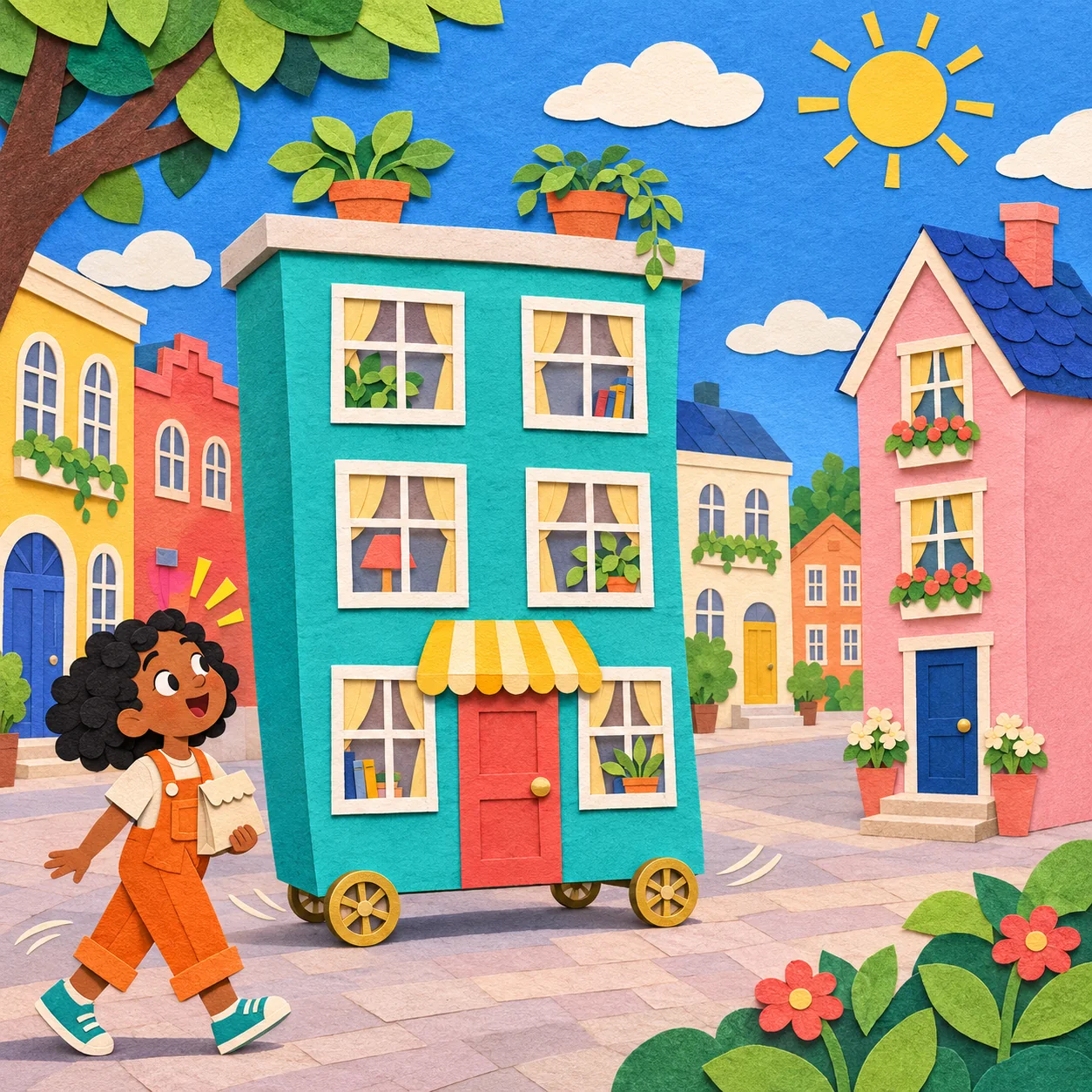
When Nessa came back from the bakery, her front door was halfway down the street.
The rest of her house was following it.
Four little brass wheels had appeared beneath the walls. The yellow awning flapped. The two plants on the roof leaned into the breeze.
“Wait!” Nessa called. “I've got the buns!”
Her house stopped so suddenly that its letterbox hiccupped.
“Where are you going?” she asked.
“Across the road,” said the house. “I've looked at the pink house for forty years. I'd like to see what it looks like from the other side.”
Nessa considered this. She had looked at her own knees for six years, and she had never wondered what they looked like from behind. Houses clearly had different interests.
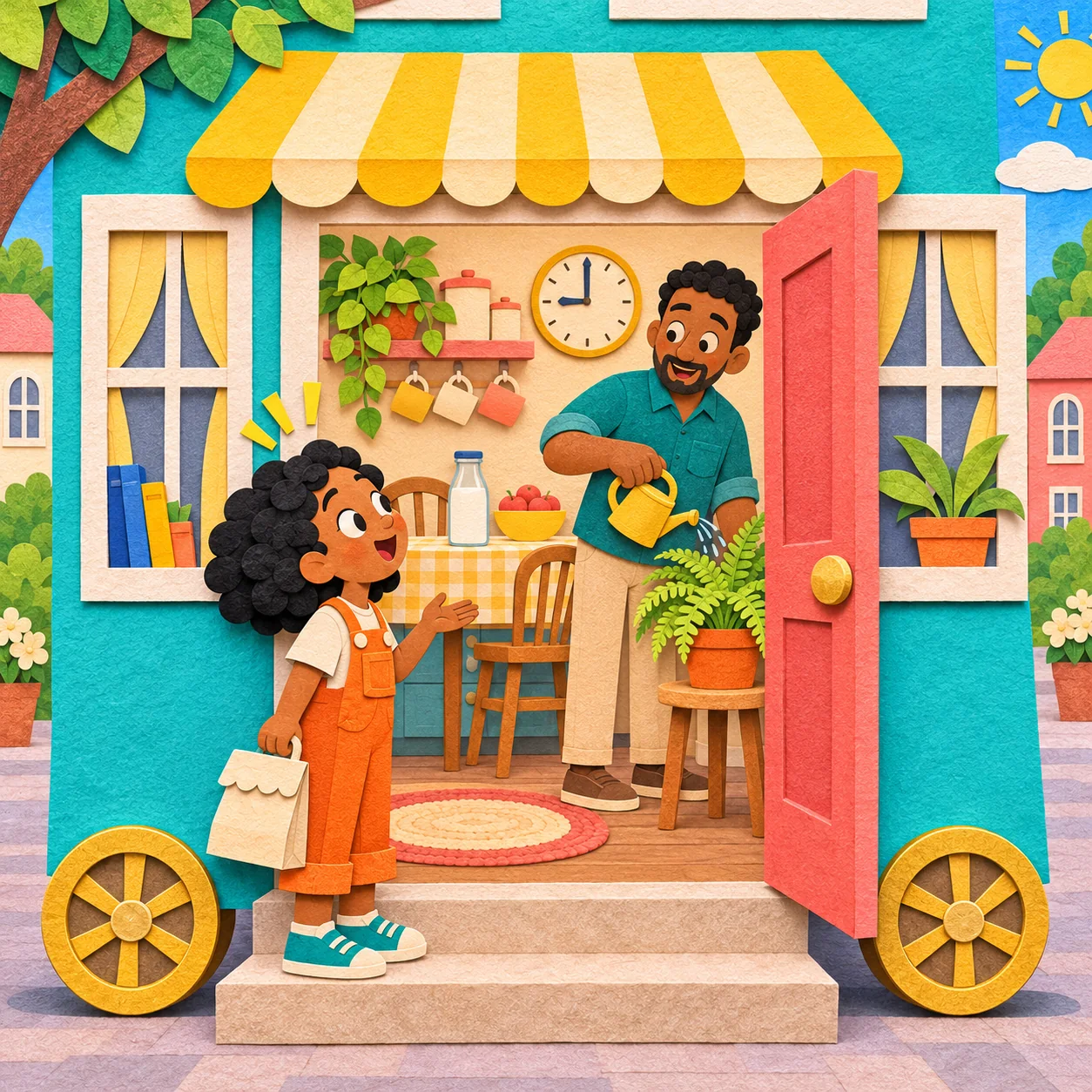
She climbed the front step. Inside, everything was where it belonged. The clock ticked. The milk stood upright. Her dad was watering a fern.
“Dad,” said Nessa, “our house is going visiting.”
“I thought the view was changing,” he said. “Ask it to be back before lunch. Your cousin's coming.”
Outside, the turquoise walls gave a happy creak.
“I won't be long.”
Nessa stepped down and the house rolled across the street. Its six windows shone. Its coral front door opened politely towards the pink house.
“Good morning! Lovely drainpipe you've got.”
“Thank you,” said the pink house. “Would you like to meet my back garden?”
It lifted its own front step. Four small wheels popped out underneath.
“Oh,” said Nessa.
By ten o'clock, the whole street had got the idea.
The bakery went to call on the library. The library squeezed between two shops and asked whether anyone had seen a smaller gap. A narrow yellow house was trying to visit its sister, which looked exactly like it, apart from a pigeon on the roof.
Nessa followed her house into the square. It was easy to spot: turquoise walls, six windows, yellow awning, two plants riding on top. Everything else was becoming difficult to spot at all.
The flower shop was behind the dentist. The dentist was behind the bakery. The bakery was behind the library, which had decided to turn round.
“Excuse me.”
“After you.”
“No, after YOU.”
Nobody moved.
In the middle of it all stood the postman, holding one envelope and looking as though he had forgotten every word he knew.
“It's for you,” he told Nessa at last. “Your cousin says she's coming early.”
Nessa looked at the square. Her cousin would never find their front door in that lot. Nor, probably, would lunch.
“Everybody back where you started!” she called.
The houses began to shuffle.
“Where DID I start?” asked the yellow house.
“Beside me,” said its sister.
“But you look just like me.”
“I have a pigeon.”
The pigeon flew to the other roof.
“That,” said the yellow house, “has not helped.”
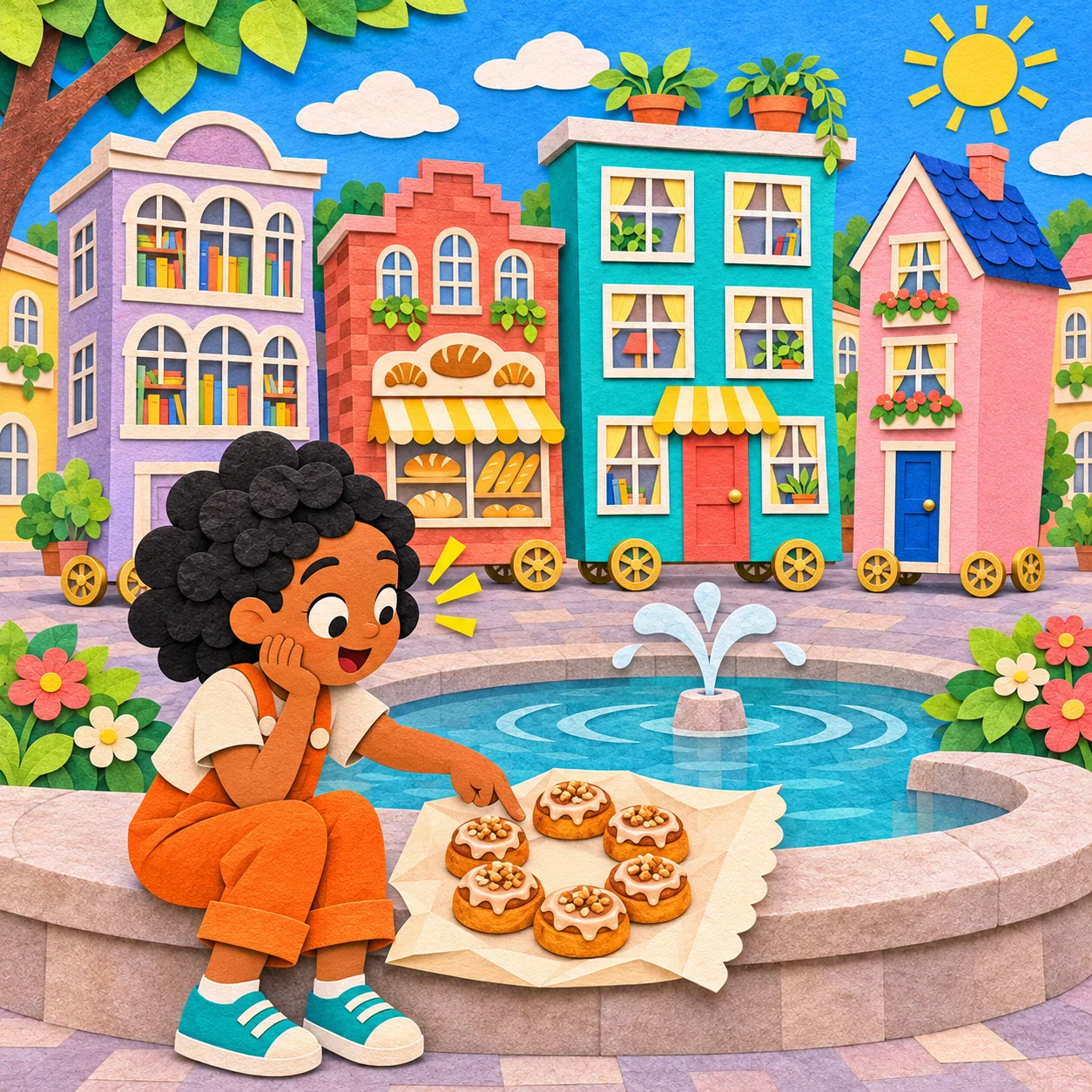
Nessa sat on the edge of the fountain. In her paper bag were six buns, warm and sticky. She put them in a circle on the folded bag, leaving a little space between each one so they wouldn't stick together.
Then she looked up.
“Don't go home yet,” she said.
The postman groaned.
“I mean, there's room for everyone. We just need to leave gaps.”
With a piece of chalk from her overall pocket, Nessa drew a big circle around the fountain. Then she marked spaces round the outside, like buns round a paper bag.
“Doors facing in,” she called. “Room to walk between. And please mind the flowerbeds.”
The houses rolled carefully into place. The library tucked itself beside the bakery. The two yellow houses settled on opposite sides, which made telling them apart much easier. The pink house parked next to Nessa's.
At last there was a clear path between every front door.
Nessa's house sighed. Its awning fluttered down like a satisfied eyelid.
“Much better. Shall I put the kettle on?”
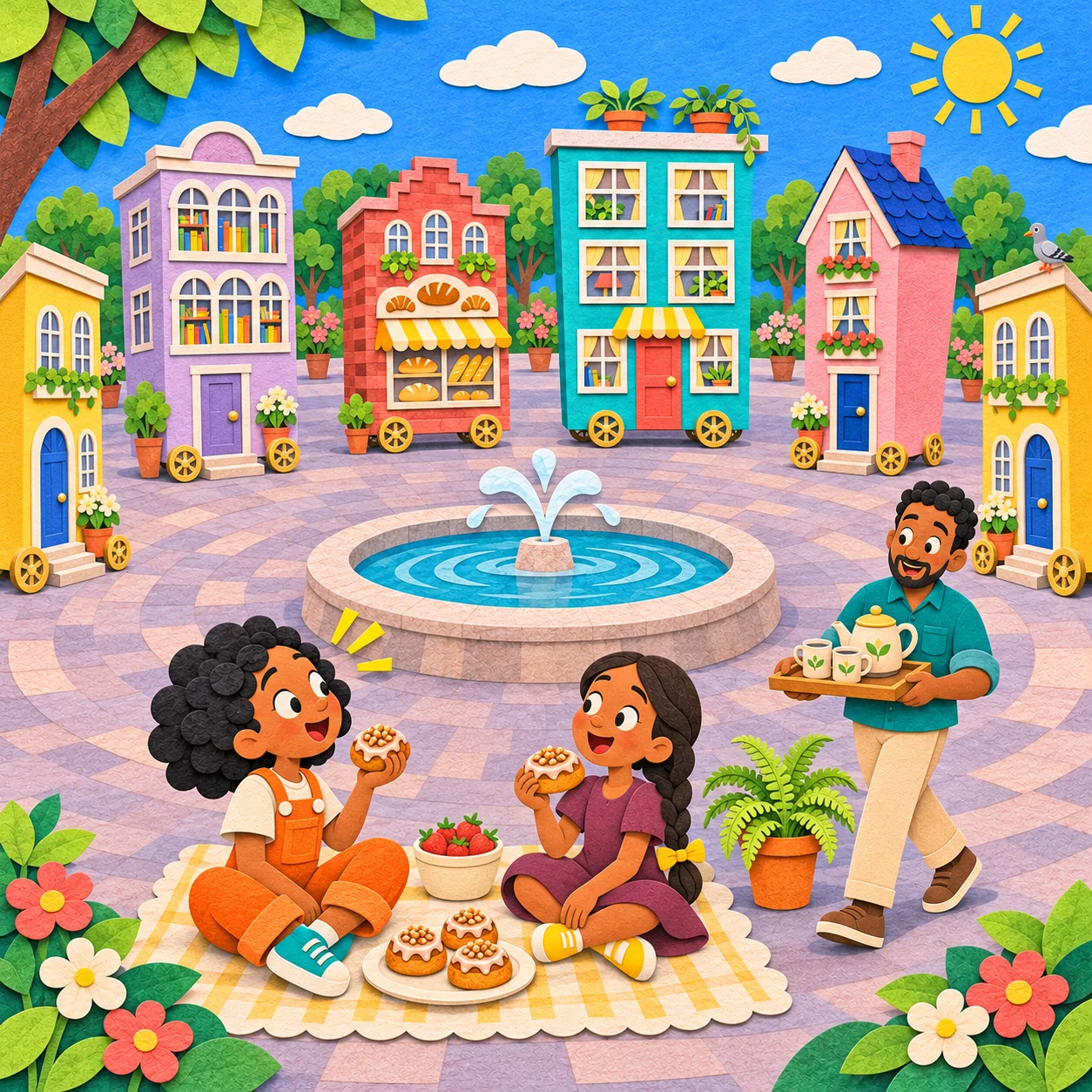
Doors opened all round the square. People came out carrying chairs and cushions. Nessa's dad brought a pot of tea and the fern, which he was still watering.
Her cousin arrived with a tub of strawberries.
“I went to your street,” she said. “It was mostly pavement.”
“We're here today,” said Nessa. “Come and have a bun.”
They ate beside the fountain while the houses admired one another's windows. The bakery passed round little cakes. The library lent everybody something to read. The postman put his feet up.
At four, the houses rolled home, one at a time. Nessa's cousin rode back with them. She said it was the nicest bus she had ever been on.
By bedtime the street was quiet again. Nessa's house stood in its usual place, with its wheels tucked away.
“Did you enjoy visiting?” Nessa asked.
“Very much,” said the house. “Next week, shall we invite somebody here?”
Nessa looked out of the window. Across the road, the pink house wiggled its drainpipe.
“Somebody,” she said, “has already started packing.”